
For roofers and builders
Solar Shingles for Roofers and Builders
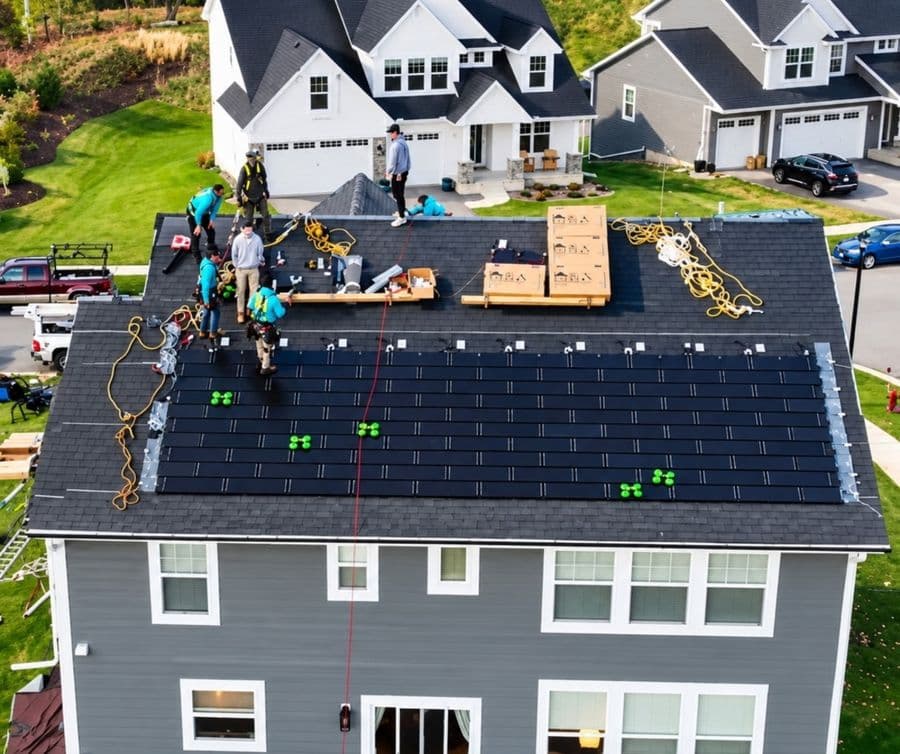
Sell solar on every re-roof with the crew and tools you already have. It installs like a roof, because it is one.
What's on the truck
A shingle your crew already knows how to lay.
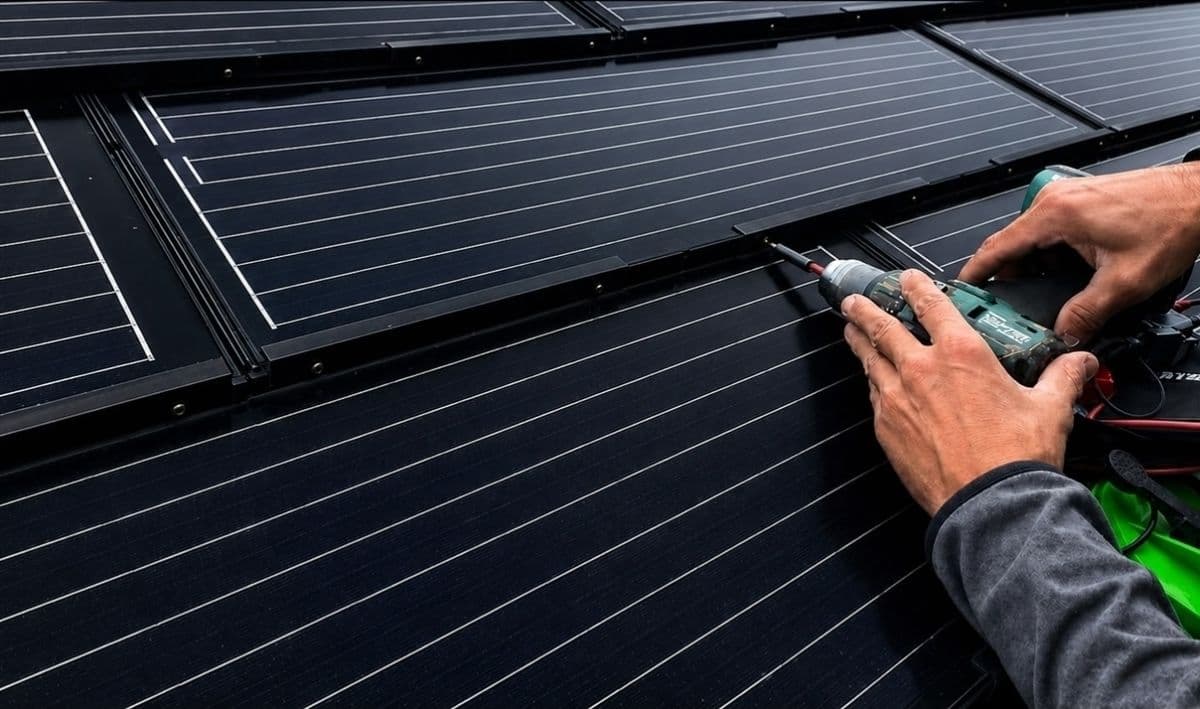
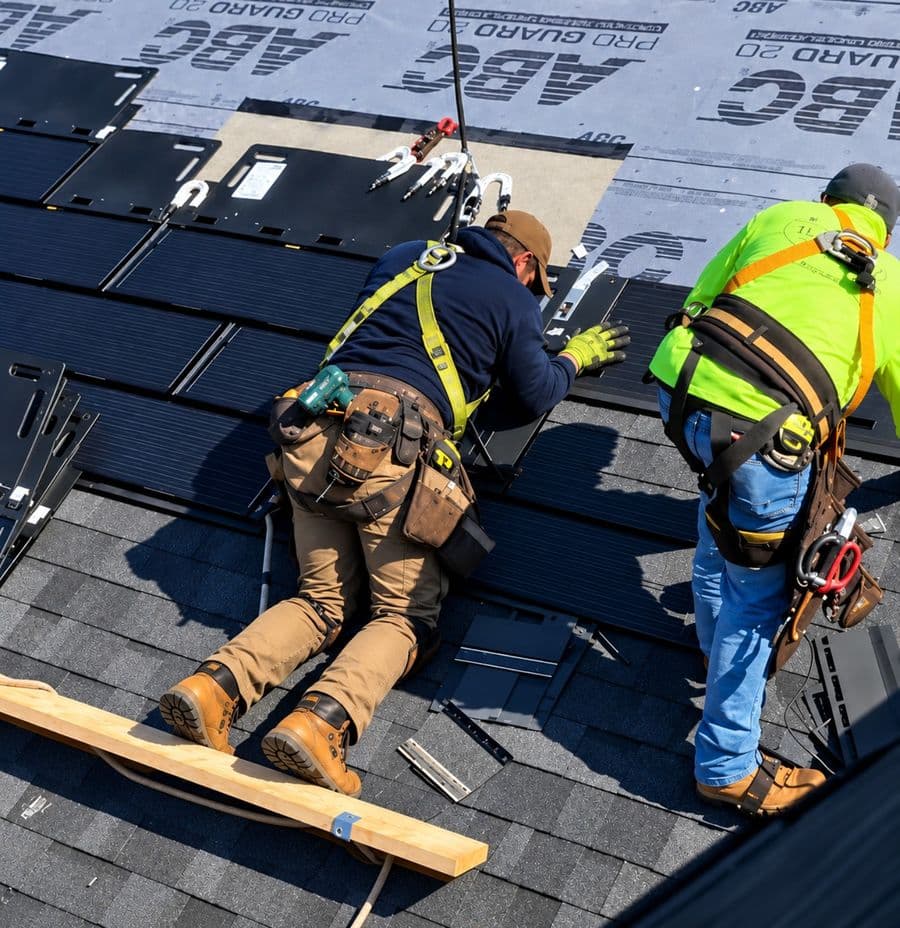
Each shingle is a baseplate plus a solar PV insert. Baseplates fasten down in rows over underlayment, the inserts clip in, and neighboring shingles join with horseshoe connectors. No rails and no rack bolted through the roof.
Courses are offset by 50%, so the array follows hips and valleys the way any shingle course does. Each shingle is 41.6 by 31.5 inches, shows 13.1 inches to the weather and weighs 17.6 lb.
In the box, per shingle
1 baseplate1 solar PV insert2 clips3 baseplate clips2 horseshoe connectors6 "L" bracket screws6 U-nuts
Track one
For roofers
Most of the job is what you already do: tear-off, underlayment, flashing, courses. The re-roof stays your job, and solar becomes something you can offer on it, using your own crew.
Join the cooperative
Installers join the Energy ReLeaf cooperative. On jobs installed by a cooperative member, the roof and solar carry a 25-year warranty, and batteries and electronics carry a 10-year warranty (third-party components). That is what you can put in front of a homeowner.
Working with an electrician
The touch-safe, plug-and-play connectors keep electrician labor to a minimum, always subject to local requirements. We strongly recommend a licensed electrician on site during installation to observe the connections and test the system.
Here's why that matters to your schedule. An incomplete connection means sending the roofers back and removing 5 to 10 shingles to find the faulty one. Having the connections observed and tested while the crew is on the roof is what prevents that.
Power on without the utility wait
Battery storage is integrated in the roof system. By default the system doesn't feed back to the grid, so it can be turned on right away, with no waiting on utility interconnection. The owner can choose to export if they want to.
Service calls are small
If a shingle is damaged, remove six screws and swap the PV insert. The roof underneath never opens, so a callback is a repair and not a tear-off.
Track two
For builders
On new construction, solar shingles are simply the roof on the planes that get the most sun, so there's no second trade bolting rails on after the shingles are down.
Decide at design
A solar-ready roof is decided before framing. Send plans early and we'll look at orientation, vents and wire runs while they're still easy to change.
Write it into the spec
UL 790 Class A fire, UL 1897 wind, TAS 100 rain, UL 1703 and IEC 61215 listings, and 4.6 lb per square foot. Full specs and parts list and warranty and certifications.
Permits and handover
Permits and inspection follow local requirements. Because the battery is in the roof system and nothing exports by default, the system can be turned on right away instead of waiting on utility interconnection.
Questions
Installer and builder questions.
Do I need an electrician to install solar shingles?
What training does an installer need?
What tools and crew size does the install take?
How do builders spec solar shingles on new construction?
How are installers supported after the job?
Add solar to the roofs you already build.
Tell us about your crew or your next project and we'll talk through the next step.