Energy ReLeaf logo: white lettering with a green sun mark
612-456-9225Free property review
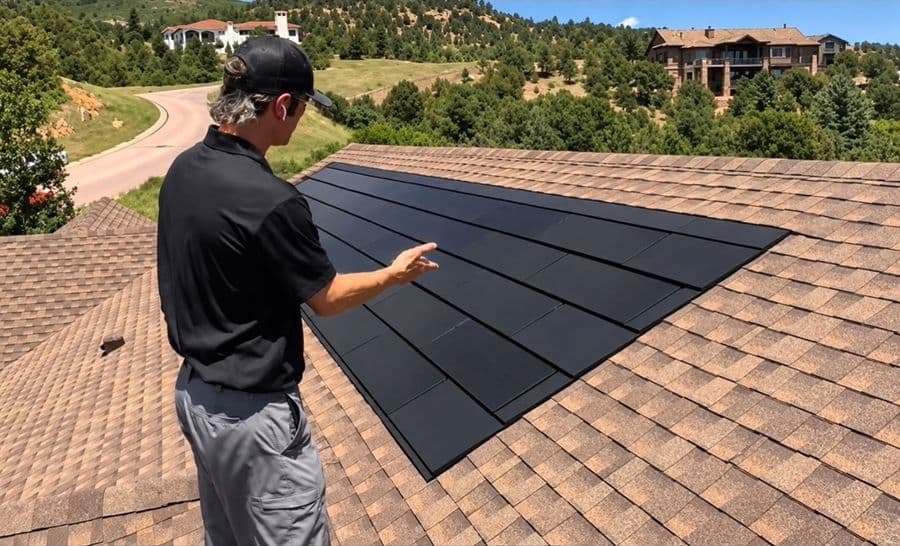
Energy ReLeaf rep on a sloped asphalt roof beside a laid-out section of black solar shingles

Storm damage · Arizona and the Gulf Coast

Storm Damage Roof Replacement With Solar Shingles

If hail or wind already means a new roof, the new roof can make power. Here's how it works, what the shingle is tested for, and what we can and can't do around your insurance claim.

The decision in front of you

If your roof is being replaced anyway

A storm replacement already means a tear-off, new underlayment and a new roof. That's the moment solar is simplest to add, because the roof is open and a crew is already scheduled.

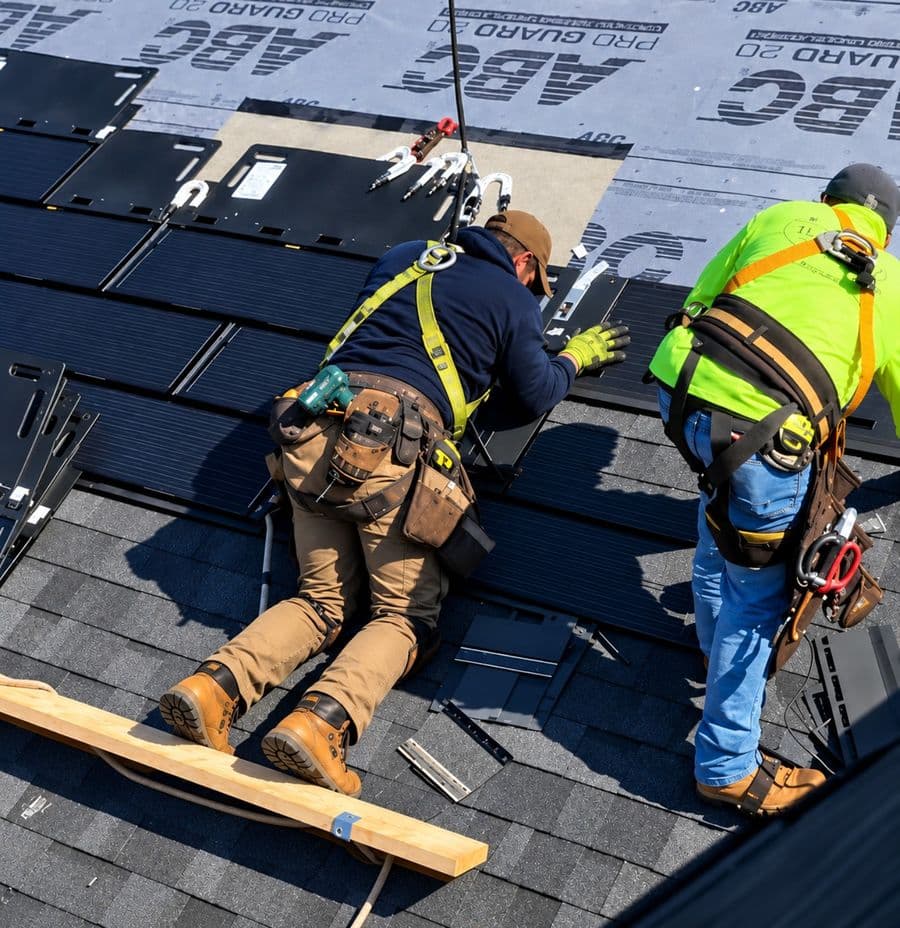
Energy ReLeaf solar shingles go down in place of asphalt on the sunny planes, installed by a roofing crew. There's no rack bolted through your new roof. Battery storage is integrated in the roof system, and by default the system doesn't feed back to the grid, so it can be turned on right away with no waiting on utility interconnection. If you want to export, it can be set up that way.

Installed by an Energy ReLeaf cooperative member installer, the roof and solar carry a 25-year warranty. Batteries and electronics carry a 10-year warranty (third-party components). See solar roofs for homes for how the re-roof goes.

Two roofers in harnesses installing solar shingles course by course over synthetic underlayment

Solar panel removal and reinstall

Already have panels?

If there are racked panels on the damaged roof, they have to come off before the roof can be replaced. You have two options.

Remove and reinstall

The panels and rails come off, the new roof goes on, then the rails are bolted back through it and the panels are reset. Check whether any panels were damaged in the storm first.

Replace both at once

The new roof is solar shingles, so there are no rails to put back. The property review looks at this option next to remove-and-reinstall for your roof.

Hail

Hail: the 2-inch steel-ball test

2 in steel ball

Each shingle's glass is tested with a 2-inch steel ball dropped from 51 inches. If a shingle is damaged later, that one shingle is replaced on its own by removing six screws.

Wind

Wind: UL 1897, 110 to 200 mph

110–200 mph

The rating depends on the fastening schedule and site exposure. We confirm the rating for your roof in the proposal. TAS 100 covers wind-driven rain.

Heat

Heat: rated to +90 °C (194 °F)

−40 to +90 °C

The operating range runs from −40 to +90 °C (−40 to 194 °F). That figure is on the datasheet.

All ratings and the warranty

Arizona

Storm-damaged roofs in Arizona

After a monsoon or hail storm, the same decision comes up across the state: if the roof has to be replaced, should the new one make power? Hail testing and heat range matter most here, and both are listed above.

Much of metro Phoenix is concrete tile, so the first question is your current roof material.

The place to start is the free property review.

Florida Gulf Coast

Storm-damaged roofs on the Gulf Coast

On the Gulf Coast the storm is usually wind and wind-driven rain, which is where UL 1897 and TAS 100 come in.

See solar shingles on the Florida Gulf Coast for more on the region.

Your insurance claim

What we can and can't do with your insurance claim

The claim is between you and your insurer. In general terms: you report the damage, an adjuster inspects it, and the insurer decides what your policy covers. Don't assume a claim covers the solar part of a roof. Ask your insurer before you decide.

What we can do

  • Look at your roof and tell you whether it's a fit for solar shingles.
  • Give you a written proposal for the solar roof.
  • Give you the product specs and certifications.

What we can't do

  • Negotiate your claim or act as a public adjuster.
  • Tell you what your policy covers.
  • Promise that your insurer will pay for solar.
  • Cover or waive your deductible.

Questions

Storm roof replacement questions.

Should I replace my roof after hail damage?
Replace it if the hail has damaged the roof's ability to shed water; minor cosmetic marks may only need a repair. Cracked or bruised shingles, widespread granule loss and punctured flashing all point toward replacement, and a roofer's inspection tells you which applies. If replacement is on the table, that's the moment to decide whether the new roof should be a solar roof.
How do I know if my roof got hail damage?
Look for signs from the ground first, then have a roofer inspect it. Dents on gutters, downspouts, vents and window screens are good clues, and so are granules collecting at downspout outlets. On asphalt shingles, hail leaves dark spots where granules were knocked off, or soft bruises. Don't climb a wet or steep roof yourself. Ask the roofer to photograph what they find.
At what point will insurance replace a roof?
Your insurer decides, based on your policy and what its adjuster finds, so the only firm answer comes from them. In general terms, insurers look at how much storm damage there is and whether a repair is practical. Policy terms such as your deductible and roof age can affect the outcome. Call your insurer or agent to start a claim. We don't negotiate claims or act as your adjuster.
What is the 25% rule for roofing?
The "25% rule" is a phrase you'll hear about roof damage, but whether any such rule applies to you varies by state and by policy. It isn't the same everywhere, so we don't quote it here. Before you rely on something you've read or been told about it, ask your insurer how your policy treats partial roof damage. Your local building department can explain any code requirements.
Do I have to remove my solar panels to replace my roof?
Yes, racked panels have to come off before the roof under them can be replaced. Then the rails are bolted back through the new roof and the panels are reset. The other option is to replace both at once: the new roof is solar shingles, so there are no rails to put back. The property review looks at both options for your roof.
Can solar shingles replace a tile roof?
That depends on the roof deck and structure, and it is checked roof by roof. Concrete and clay tile are common in Arizona and Florida, so tell us your current roof material on the review form, and we'll answer for your roof specifically.

Roof damaged? Check it for solar.

Tell us where the roof is and what happened. We'll tell you whether solar shingles are a fit.