Replacing your roof?
If the roof is due anyway, the new roof can be the solar system. One project, one crew.
Solar roofs for homes
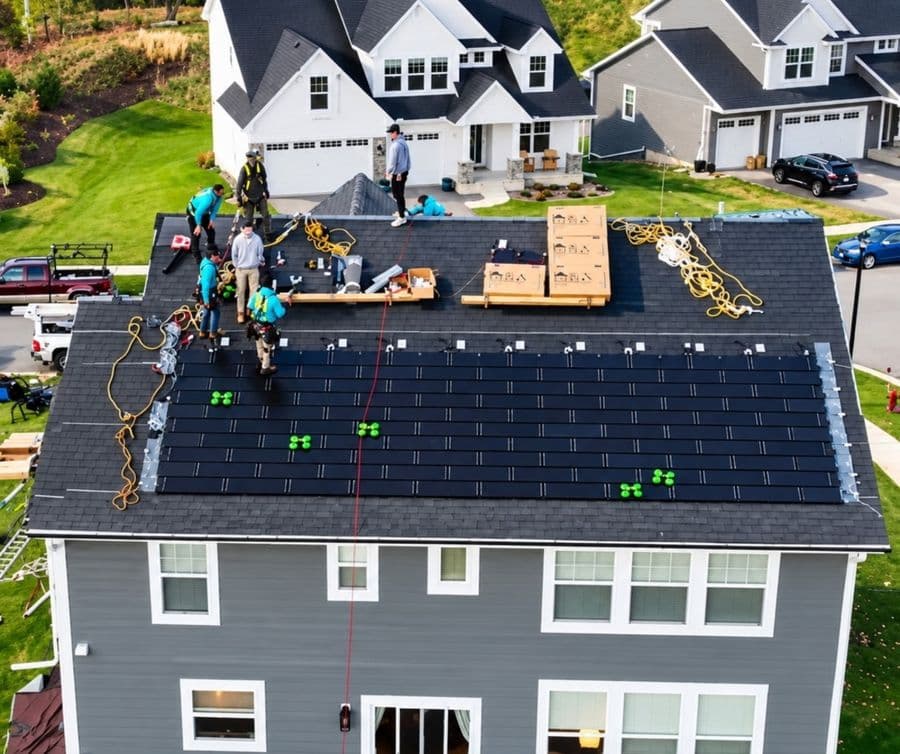
The process · 6 steps
From the first property review to the day the roof switches on. One roofing crew builds the roof and the solar system at the same time, shingle by shingle.
Step by step
Send us your address or a recent utility bill. We confirm the roof is pitched and check its age, shade and how much sun each plane gets, before anyone climbs a ladder. If the roof is flat or low-slope, we tell you up front that shingles aren't a fit.
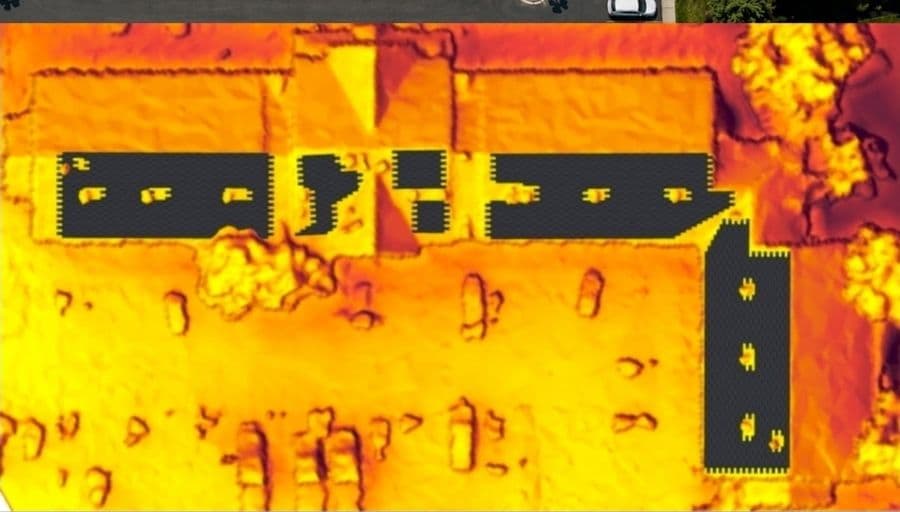
Every roof plane is modelled from aerial and thermal imaging, so the layout follows your hips, valleys and vents instead of forcing a rectangle onto them. Courses are offset by 50%, which lets the shingles follow hips and valleys.
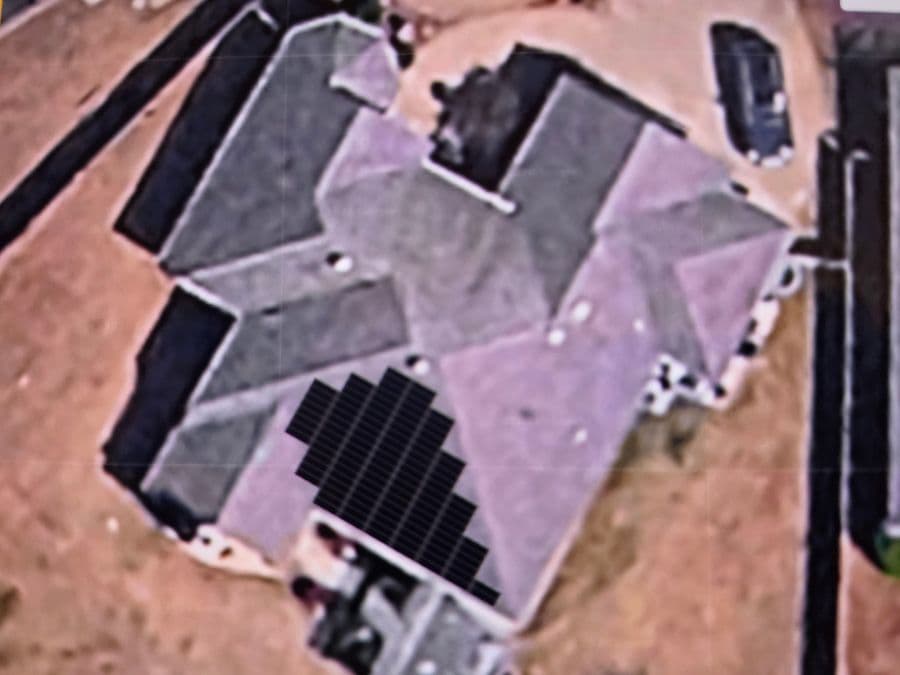
You get a system size, a production estimate for your address and the incentives that apply to you when the proposal is written. Clear numbers before you commit to anything.
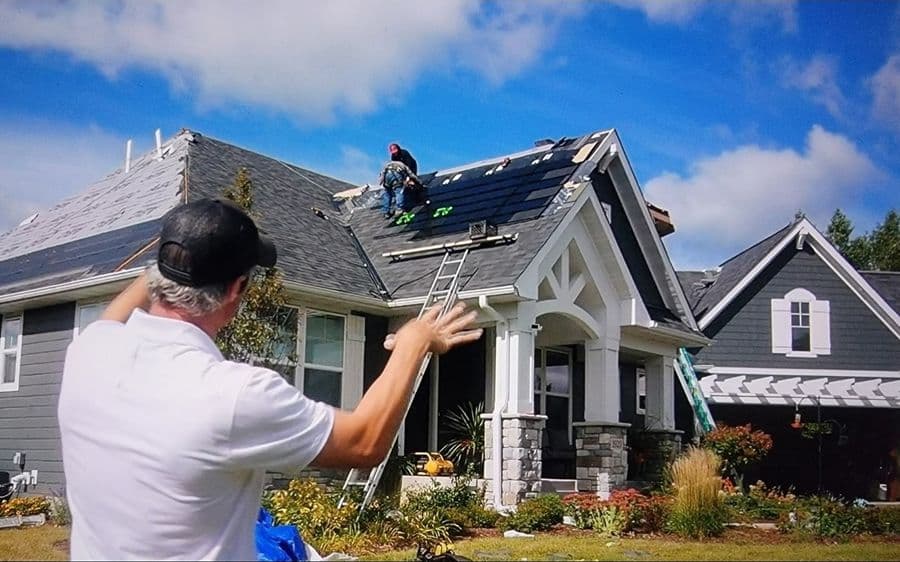
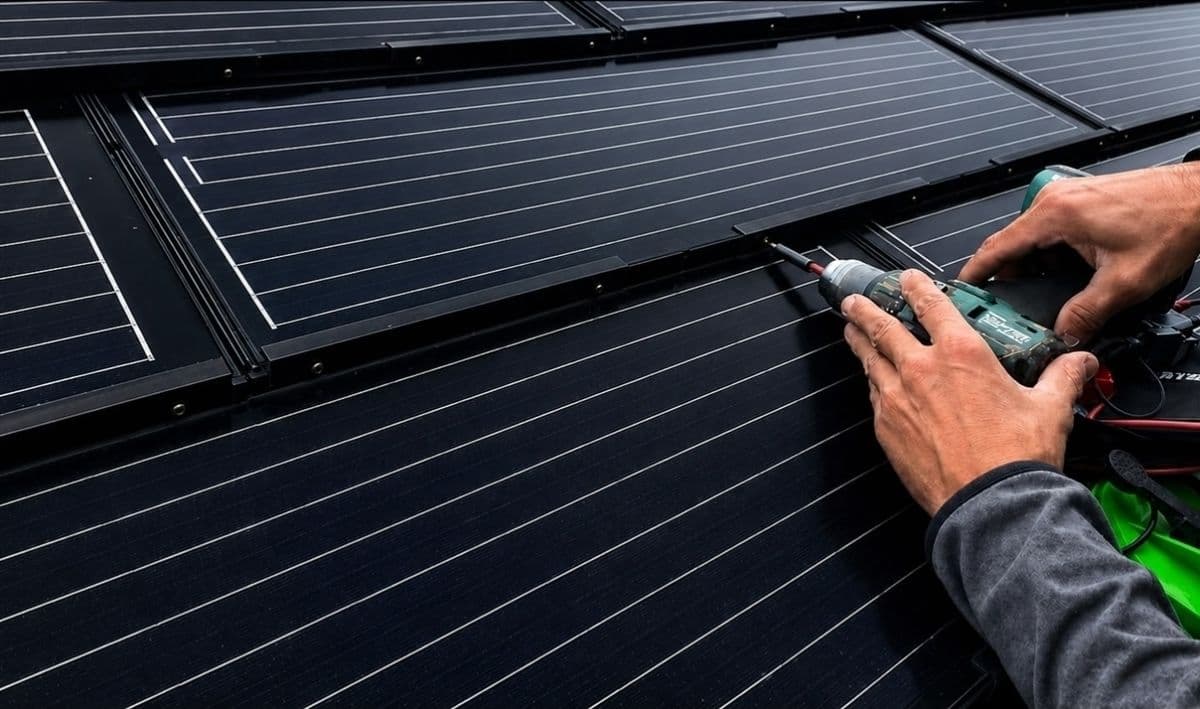
A standard roofing crew tears off, rolls out underlayment, fastens baseplates in rows, then clips the dark PV inserts in place. Same crew, same tools. Each shingle shows 1056 × 333 mm (41.6 × 13.1 in) to the weather, and there's no racking bolted through the roof.
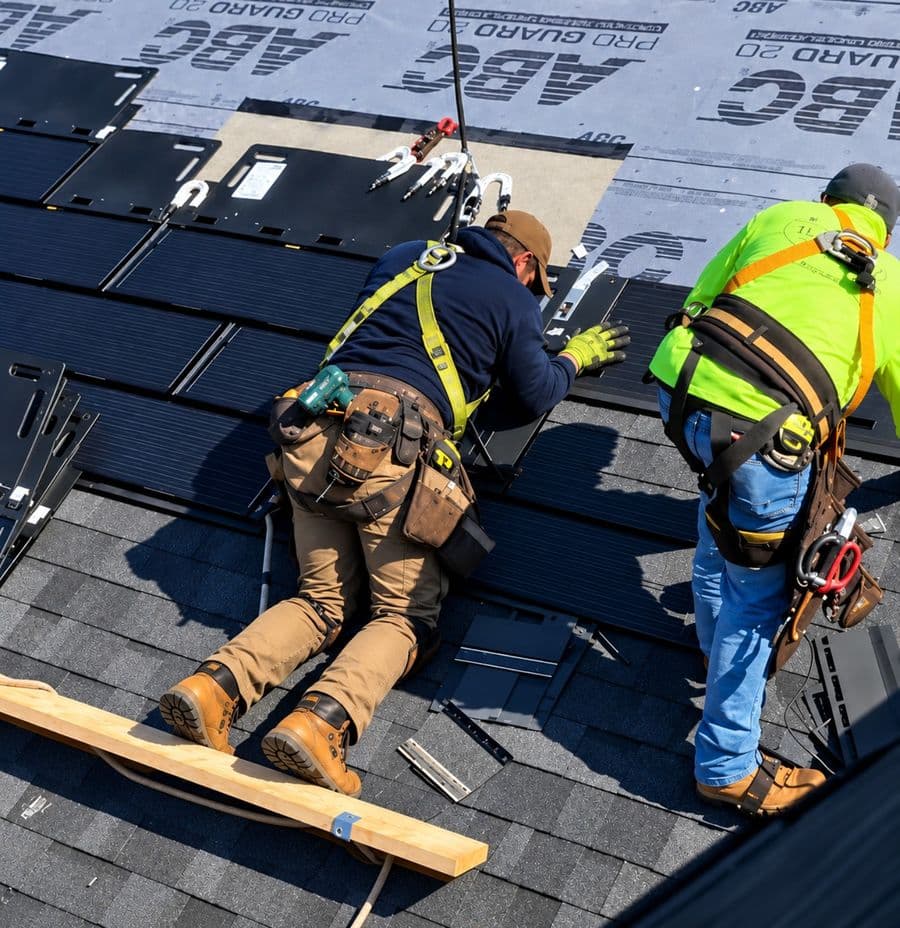
Two horseshoe connectors join each shingle to the next, and the array runs to the micro inverter and the battery storage built into the system. We strongly recommend a licensed electrician on site during installation to observe the connections and test the system, and local inspection follows code.
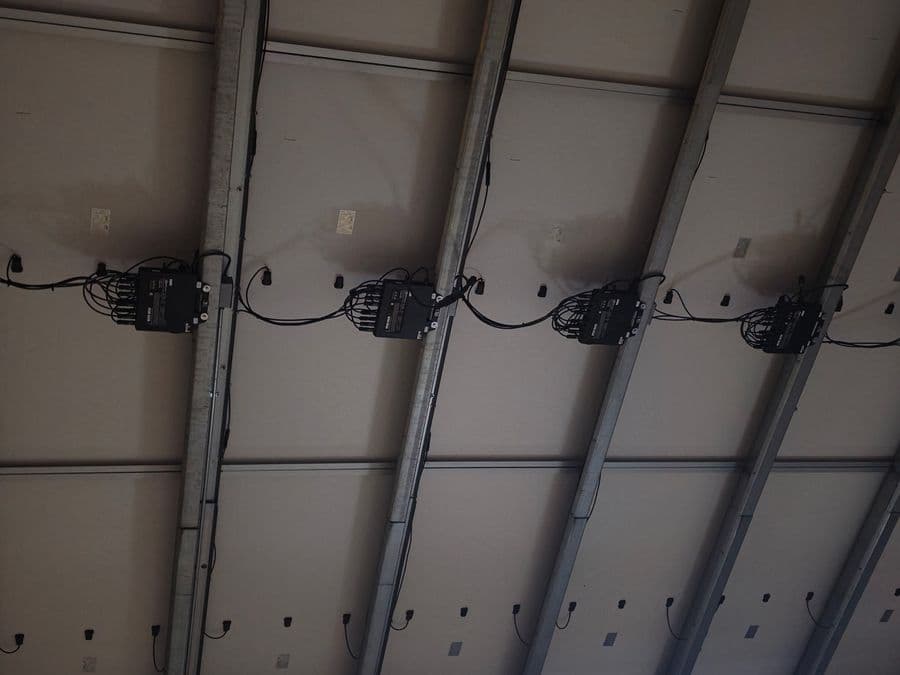
Because battery storage is integrated in the roof and the system doesn't feed the grid by default, it can be switched on right away instead of waiting on utility interconnection. If you want to send power back to the grid, it can be set up to do that too.
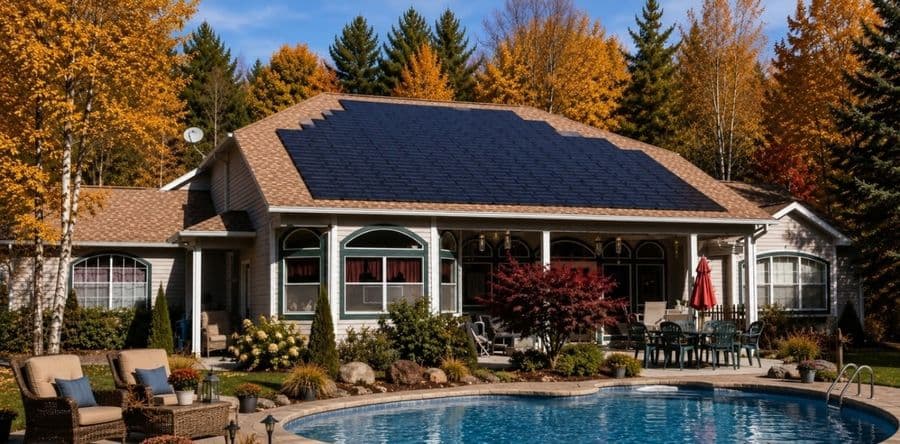
Every shingle comes with two horseshoe connectors. As each course goes down, the crew joins a shingle to its neighbor with them, so the electrical run is built at the same pace as the roof. There's no separate wiring pass after the roofing is done.
The connectors are touch-safe and plug-and-play. That keeps electrician labor to a minimum, always subject to local requirements. We strongly recommend a licensed electrician on site during installation to observe the connections and test the system.
Here's why that matters. If one connection is left incomplete and nobody catches it, the roofers have to come back and remove five to ten shingles to find the faulty one. Testing as the roof goes on avoids that trip.
The run ends at the micro inverter and the battery storage integrated in the roof system. By default the system powers the building and doesn't feed back to the grid, which is why it can be switched on right away. If you want to export power to the grid, it can do that too.
Each shingle is serviceable on its own. If one is cracked or damaged, the fix is:
The baseplate stays fastened to the deck and the underlayment underneath is never opened. A damaged shingle is a repair, not a re-roof, and not a panel coming off a rack.
Want the part numbers? See the PH-055 and PH-060 specs and parts list, or read the warranty and what each rating means.
Who does what
If the roof is due anyway, the new roof can be the solar system. One project, one crew.
Solar roofs for homesYour crew, your tools, the same courses you already lay. We train and support the install.
The roofer and builder programApartments, HOA townhomes, churches, offices and pole barns. If it takes shingles, it can make power.
Commercial pitched roofsQuestions
A free property review tells you whether your roof is a fit and what it could produce, before anyone climbs a ladder.