A low-profile roof line
The shingles sit in the roof courses, not on rails above them. From the street it reads as a dark roof, not as panels.

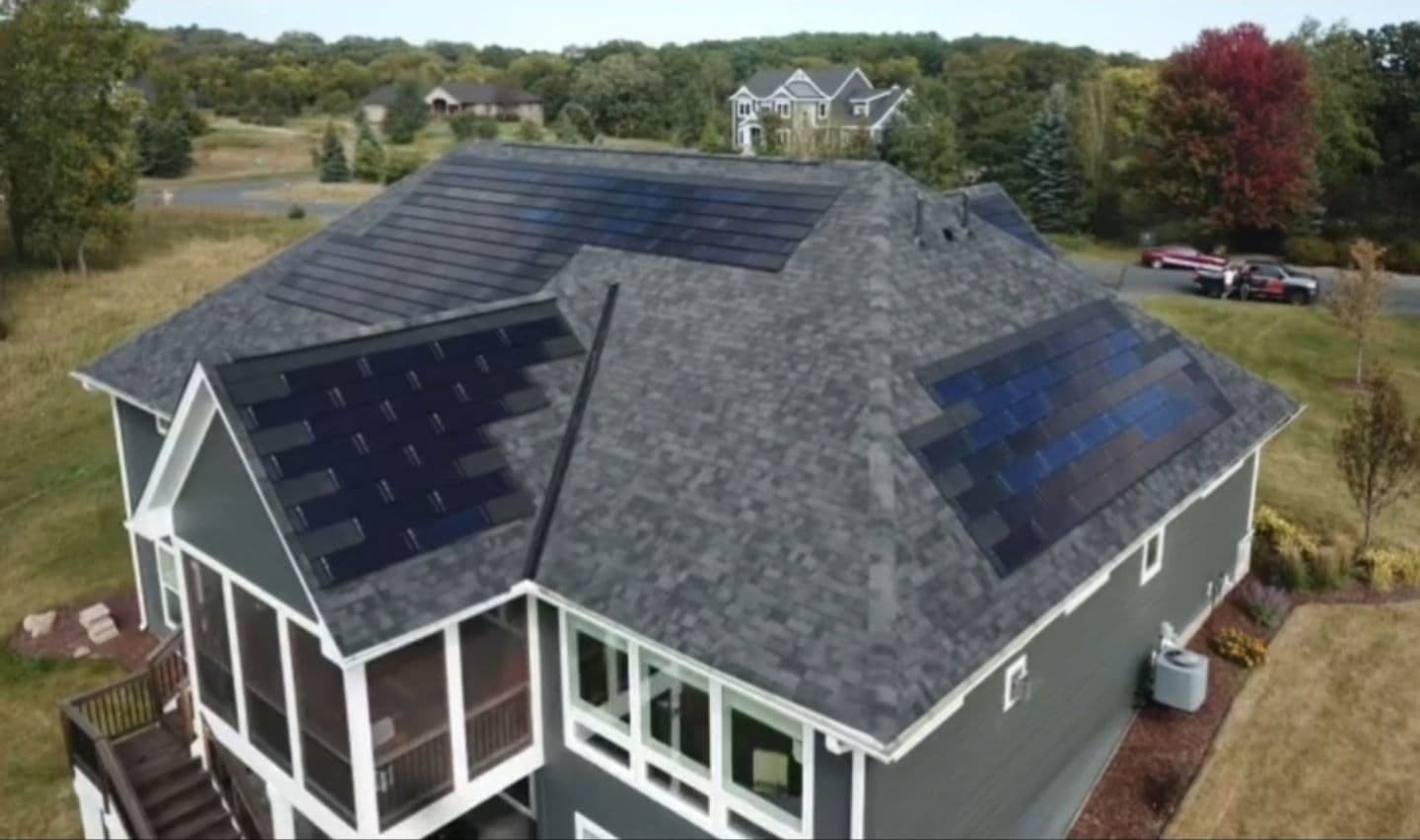
Residential solar roofs
If your roof is due for replacement, the new roof can be the solar system. Energy ReLeaf solar shingles go down in place of asphalt, on the same tear-off, with a roofing crew.
The re-roof angle
A re-roof already means a tear-off, new underlayment and new shingles. With Energy ReLeaf, the sunny planes get solar shingles instead of asphalt. The shaded planes can stay standard shingle.
The alternative is the usual two jobs: a new asphalt roof now, then a panel install that bolts rails through it. Or panels on the old roof, which have to come off and go back on when that roof wears out.
Each shingle sheds water like a roof and produces like a panel, with no racking bolted through the roof. Courses are offset by 50%, so the solar follows your hips and valleys instead of stopping at a rectangle.
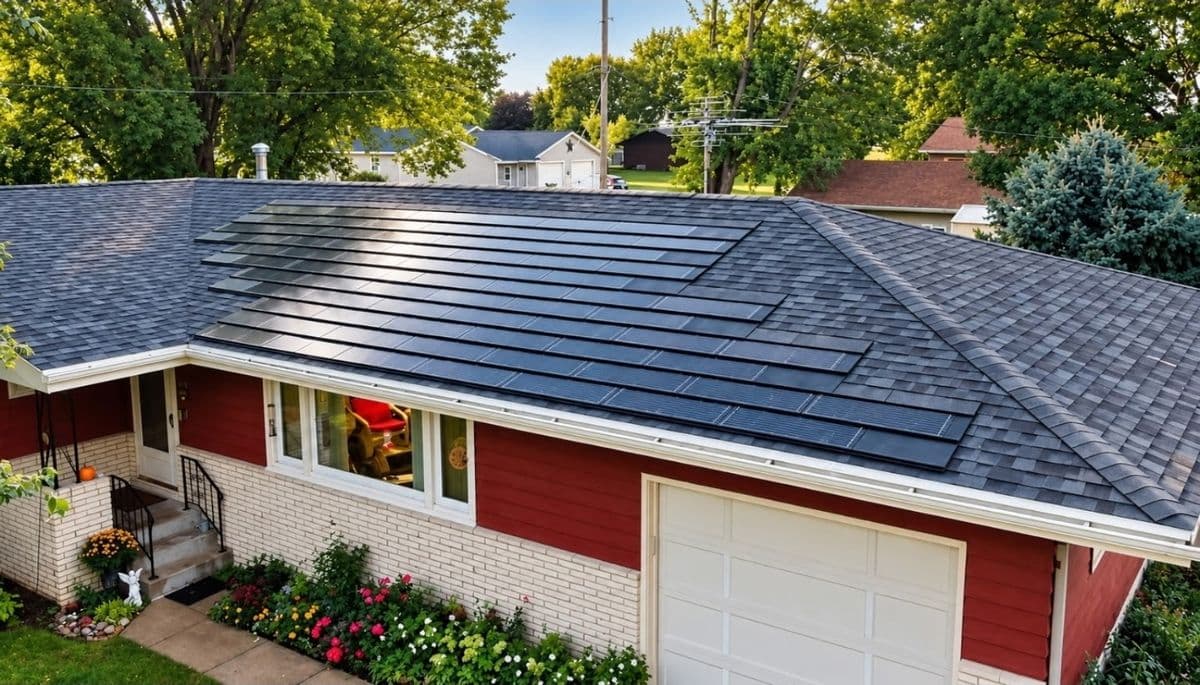
What changes on your roof
The shingles sit in the roof courses, not on rails above them. From the street it reads as a dark roof, not as panels.
UL 790 Class A fire, UL 1897 wind rated at 110 to 200 mph depending on fastening and exposure, and TAS 100 wind-driven rain. The glass is tested with a 2-inch steel ball dropped from 51 inches.
All ratings and the warrantyIf a shingle is ever damaged, its PV insert comes out by removing six screws. The roof around it stays closed. When an Energy ReLeaf cooperative member installer does the job, the roof and solar carry a 25-year warranty; batteries and electronics carry a 10-year warranty (third-party components).
Battery storage is integrated in the roof system. By default the system doesn't feed power back to the grid, so it can be switched on right away instead of waiting on utility interconnection. If you want to export to the grid, it can be set up that way.
Monocrystalline PERC cells, 24 half-cells per shingle. The system is sized by how much sunny roof you have.
Full specs and parts listNew builds
On a new home there is no old roof to tear off, so solar shingles are simply the roof on the planes that get the most sun. The best time to decide is at design, before the roof is framed, so the roof planes, vents and wire runs can be laid out with solar in mind.
Builders can read how solar shingles fit new construction.
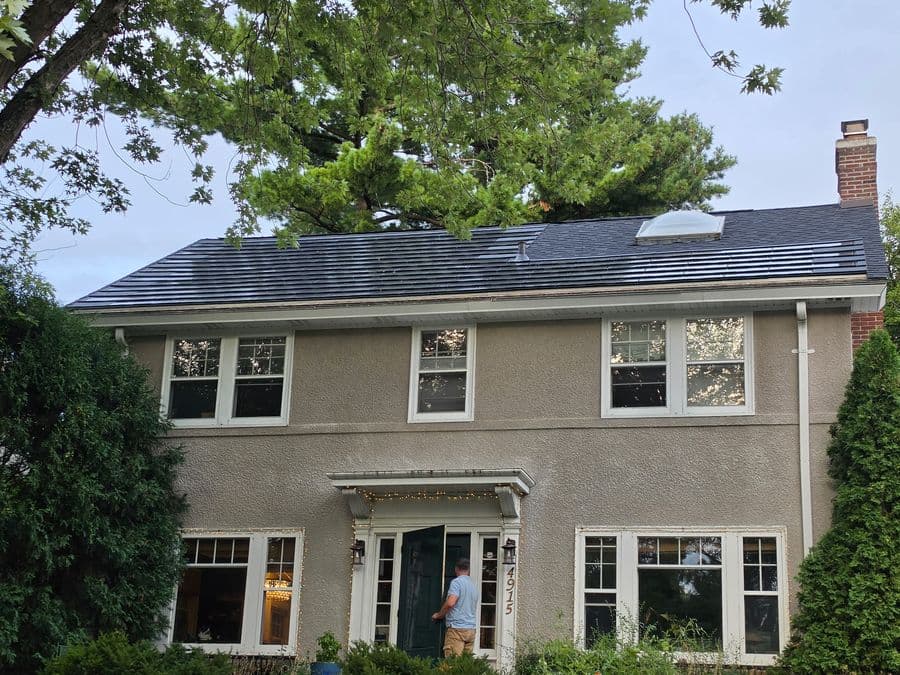
From review to power-on
Send your address or a recent utility bill. We check the roof shape, age, shade and how much sun each plane gets.
Each roof plane is modelled from aerial imaging. You get a system size, a production estimate for your address and the incentives that apply to you.
Tear-off, underlayment, baseplates in rows, then the solar inserts clip in. The touch-safe, plug-and-play connectors keep electrician labor to a minimum, always subject to local requirements. We strongly recommend a licensed electrician on site during installation to observe the connections and test the system.
The system is inspected as local code requires. With battery storage in the roof and no grid export by default, it can be switched on right away, without waiting on utility interconnection.
Fit, cost and incentives
We quote each roof after the property review rather than publish a price, because roof size, pitch and how much of it is solar change the number. Solar incentives change, so your proposal lists the ones that apply at your address when you get it.
Questions
Tell us where the roof is and we'll tell you what it can do. Homes, commercial buildings, and roofers or builders who want to offer it.