55 W per shingle
Same size, weight, cells and ratings as the PH-060. Your proposal names the model it is based on, with the production estimate for your roof.

Product and specs
One part that is both the roof and the solar module. Here is every number from the datasheet, the parts in the box, and how the two models differ.
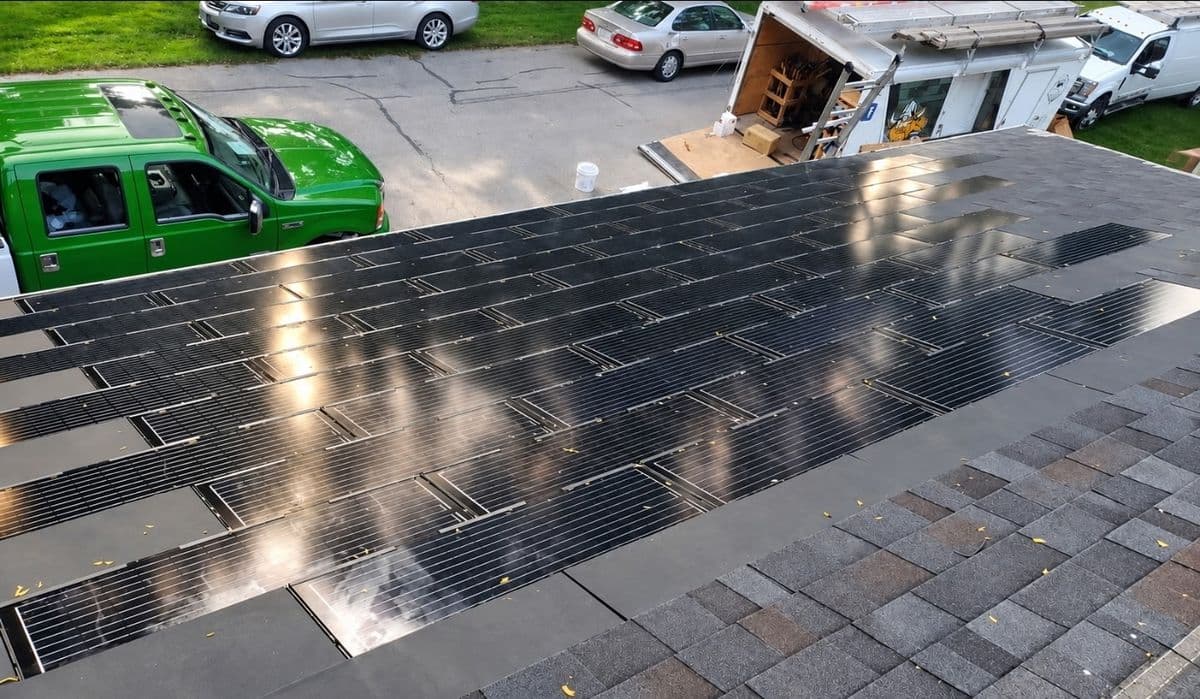
An Energy ReLeaf solar shingle has two layers. The baseplate fastens to the roof deck in courses, like any shingle. The solar PV insert clips into the baseplate and is the part you see. Together they shed water like a roof and produce power like a panel.
There are two models. The PH-055 is rated at 55 watts per shingle and the PH-060 at 60 watts. Both use 24 monocrystalline PERC half-cells in two rows of twelve, with one bypass diode per shingle, and both are the same size and weight. They go on pitched roofs on homes and on sloped-roof commercial buildings. Flat and low-slope roofs are not a fit.
There is no racking bolted through the roof and no rails sitting above it. The roof line stays low and even, which is why a finished roof reads as a roof first.
Datasheet
| Models | PH-055 / PH-060 |
|---|---|
| Rated power | 55 W (PH-055) / 60 W (PH-060) per shingle |
| Cells | Monocrystalline PERC, 24 half-cells in 2 rows of 12 |
| Bypass diode | 1 per shingle |
| Overall size | 1056 × 800 mm (41.6 × 31.5 in) |
| Exposed area | 1056 × 333 mm (41.6 × 13.1 in) |
| Weight | 17.6 lb per shingle (4.6 lb/sq ft) |
| Operating range | −40 to +90 °C |
| Fire | UL 790 Class A |
| Wind | UL 1897, 110–200 mph (depends on fastening and exposure) |
| Wind-driven rain | TAS 100 |
| Hail test | 2 in steel ball dropped from 51 in |
| Listings | UL 1703, IEC 61215, CEC and FSEC listed |
| Warranty | 25 years on the roof and solar when installed by an Energy ReLeaf cooperative member installer. Batteries and electronics: 10 years (third-party components). |
| Storage | Battery storage integrated in the roof system |
The full datasheet is available on request. Email peter@energyreleaf.com and we'll send it over.
Seven parts, all of them roofing-crew friendly. The horseshoe connectors join each shingle to the next, so the wiring is built as the courses go down.
The wind rating changes with the fastening schedule and the exposure category of the site. We confirm the rating for your roof in the proposal. See every rating and what it means.
Choosing a model
Same size, weight, cells and ratings as the PH-060. Your proposal names the model it is based on, with the production estimate for your roof.
The higher-output model. About 17 shingles make one kilowatt, so it puts more power on the same roof area.
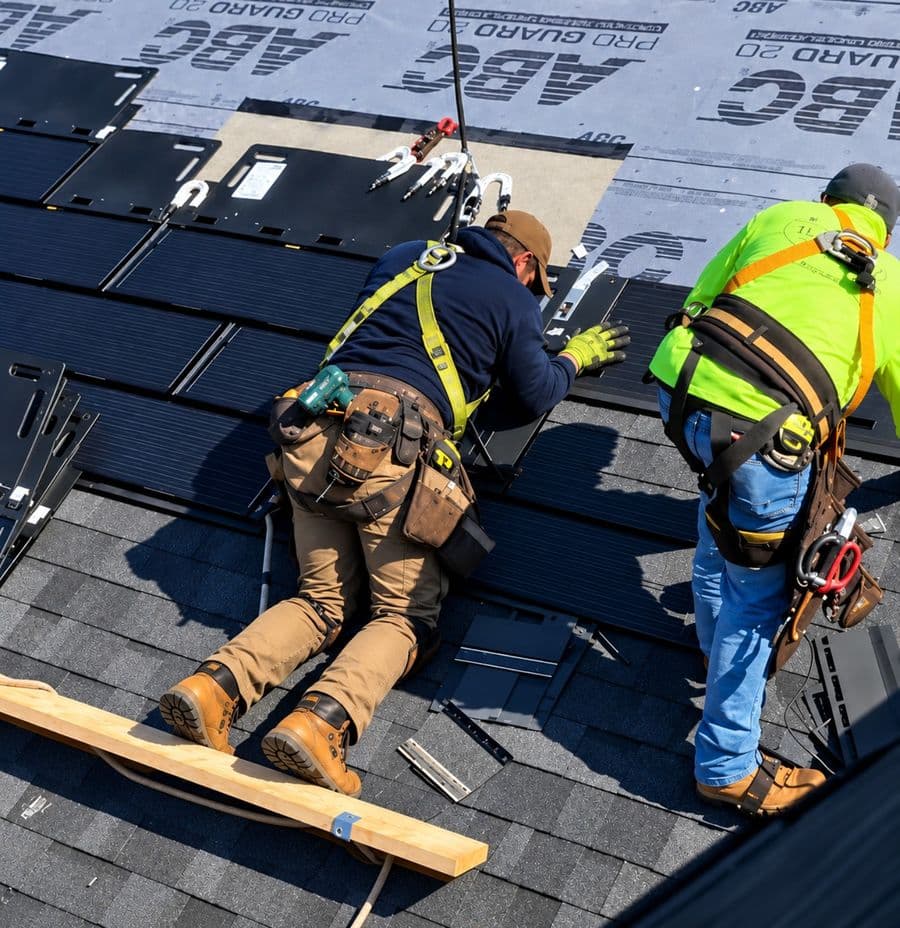
The shingles go on with a standard roofing crew and standard roofing tools. The crew tears off, lays underlayment, fastens baseplates in rows, then clips the PV inserts in place. The touch-safe, plug-and-play connectors keep electrician labor to a minimum, always subject to local requirements. We strongly recommend a licensed electrician on site during installation to observe the connections and test the system.
Courses are offset by 50%, which lets the shingles follow hips and valleys.
Battery storage is integrated in the roof system. By default the system doesn't feed back to the grid, so it can be switched on right away instead of waiting on utility interconnection. If you want it to send power to the grid, it can.
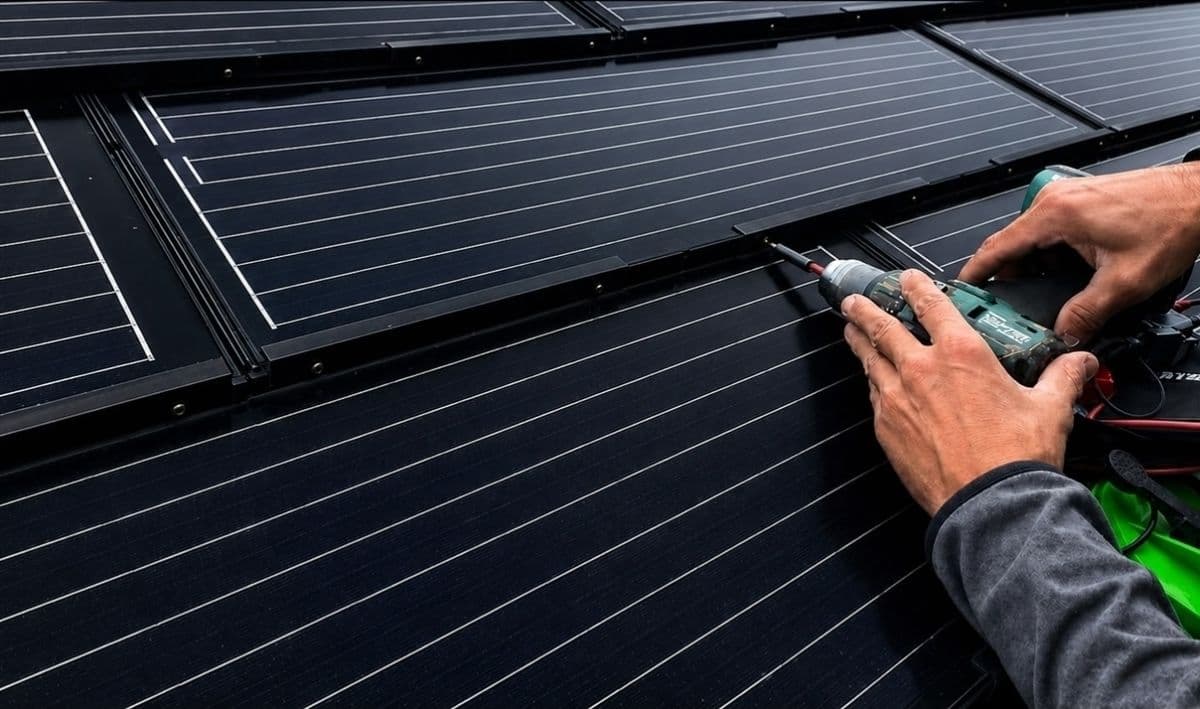
Service is just as plain. If a shingle is ever damaged, its PV insert comes out by removing six screws. The baseplate and underlayment stay put. That is a repair, not a re-roof.
Each shingle shows 1056 × 333 mm (41.6 × 13.1 in) to the weather, so a roof can be solar edge to edge or solar on the sunniest planes with standard shingles on the rest.
Recognition




Questions
Send us the address. We model each roof plane and tell you how many shingles fit and what they should make.