
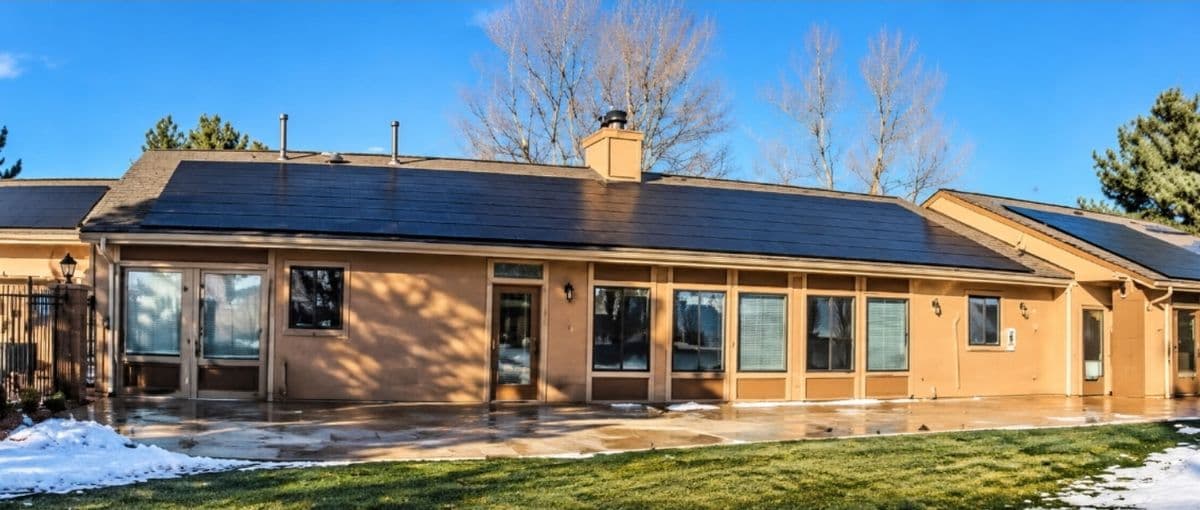
Minnesota · Headquarters
Solar Shingles in Minnesota, from a Minneapolis Company
Our shingles are designed for the winters we live through. Rated from −40 °F, hail-tested and installed by roofing crews, on homes and pitched-roof buildings.
A Minneapolis company.
Energy ReLeaf is headquartered at 4928 Cedar Avenue S. in Minneapolis. Our shingles are designed, engineered and assembled in the USA.
Each shingle is a 55 or 60 watt solar module on a baseplate that goes down in courses like any other shingle. Courses are offset by 50%, so the layout follows hips and valleys. Installs are done by Energy ReLeaf cooperative member installers, and there's no racking bolted through the roof.
Battery storage is built into the roof. By default the system doesn't feed back to the grid, so it can be turned on right away instead of waiting on utility interconnection. If you want to send power to the grid, you can.
See how a roofing crew installs it, or read the full shingle specifications.
Pilot install
On a Minnesota roof.
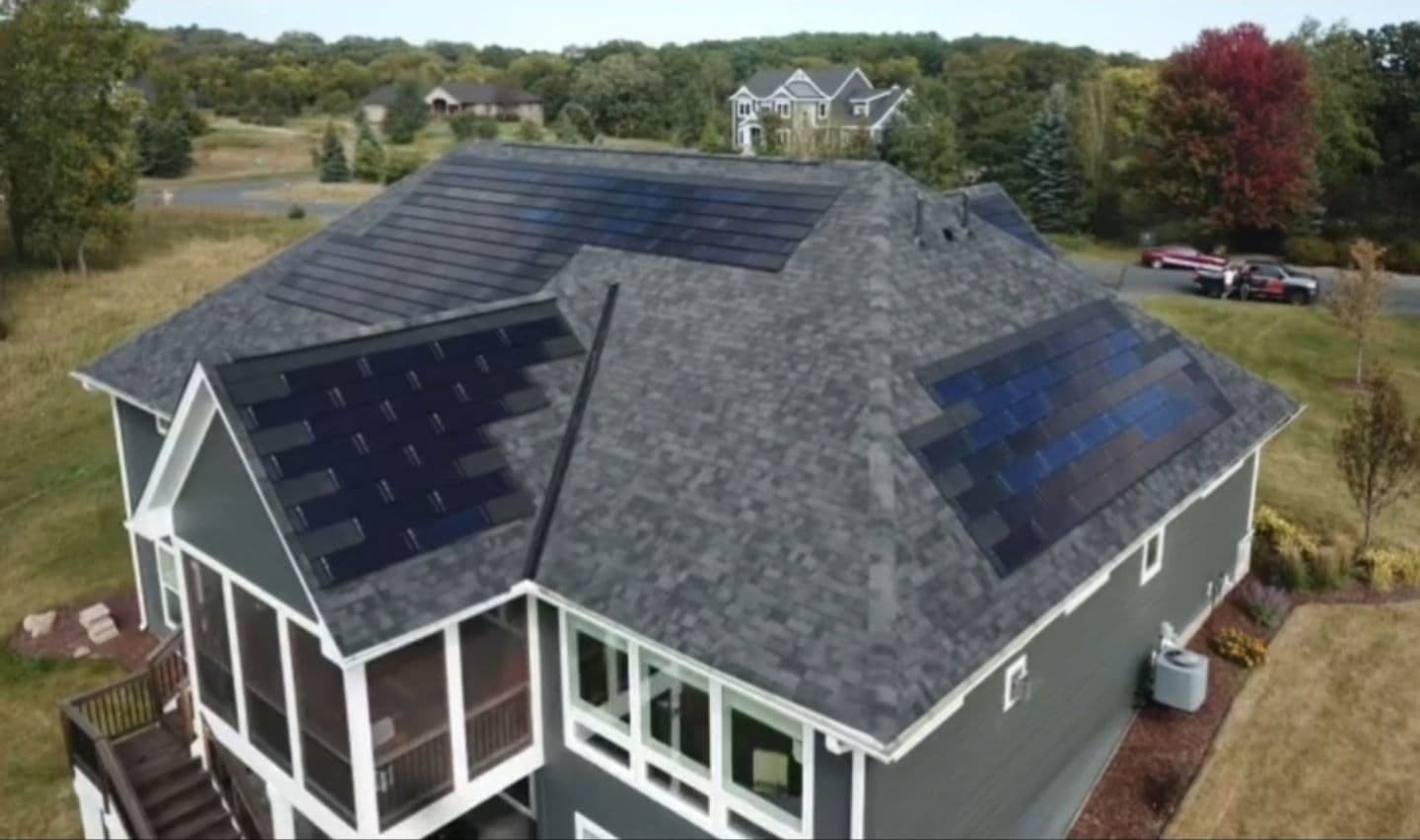
Our pilot install is a single-story ranch home in Minnesota with a low-slope 4:12 roof. One roofing crew tore off the old roof, rebuilt the deck and put solar shingles on the garage plane, with standard shingles on the rest of the house.
From the street, the solar plane reads as part of the roof. See the install, step by step.
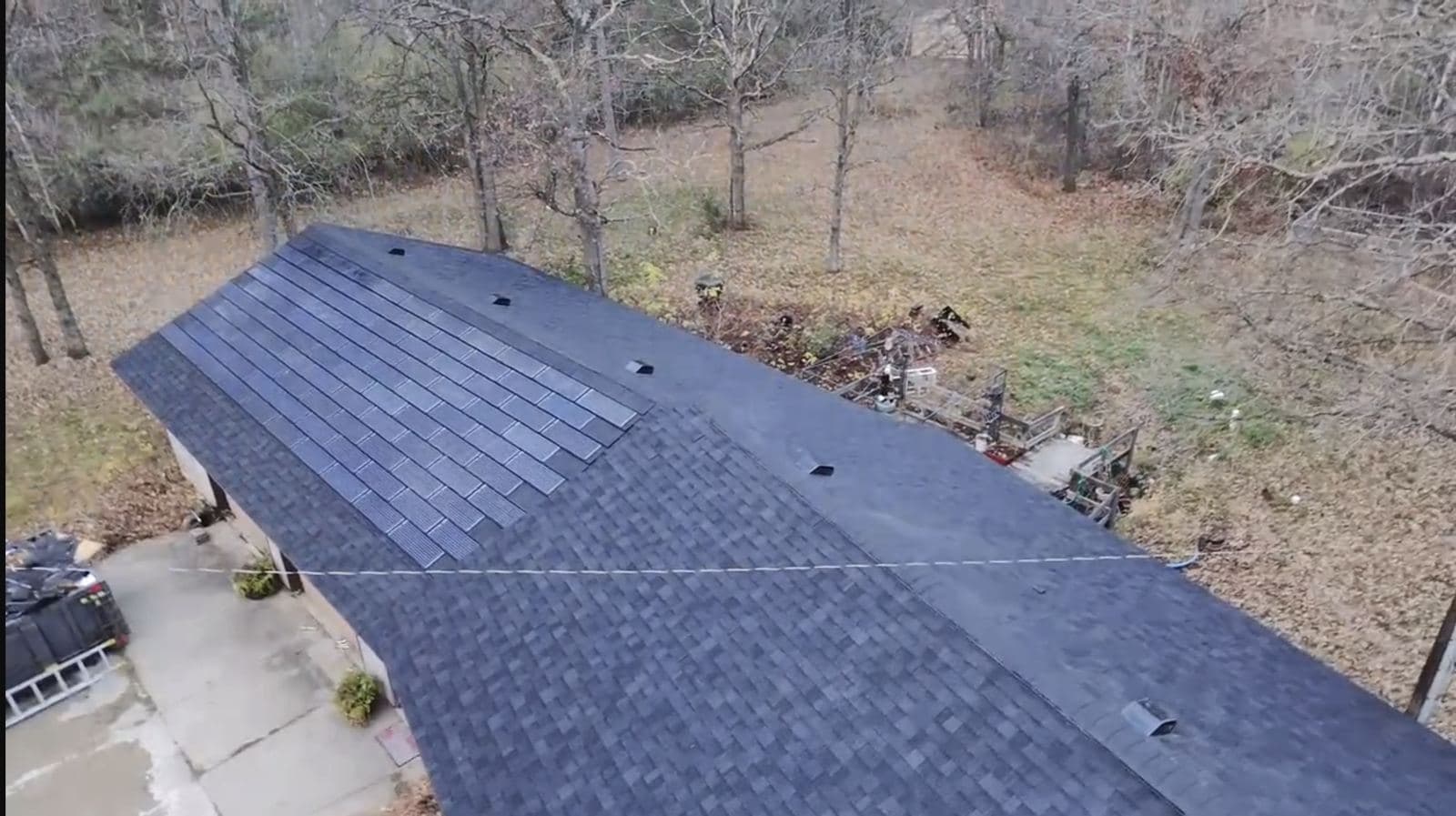
Snow, cold and hail
A roof, ready for Minnesota weather.
Rated from −40 °F
The operating range runs from −40 °F to 194 °F (−40 to 90 °C). Short days and snow cover are what lower winter output, and your production estimate accounts for both.
Nothing for snow to pack under
The shingles are the roof surface, so there are no rails or panel gaps for snow and ice to build up behind. Under snow, output pauses, then returns as it clears.
Tested with a 2-inch steel ball
Each shingle's glass is tested with a 2-inch steel ball dropped from 51 inches. A damaged shingle swaps out on its own by removing six screws.
Replacing a storm-damaged roofThe roof and solar carry a 25-year warranty when installed by an Energy ReLeaf cooperative member installer. Batteries and electronics carry a 10-year warranty (third-party components). See warranty and certifications.
Incentives and permits.
Federal, state and utility incentives for solar change often, so we don't publish rates on this page. When we prepare your proposal, it lists the incentives that apply at your address, with the system size and a production estimate.
Solar shingles need a pitched roof.
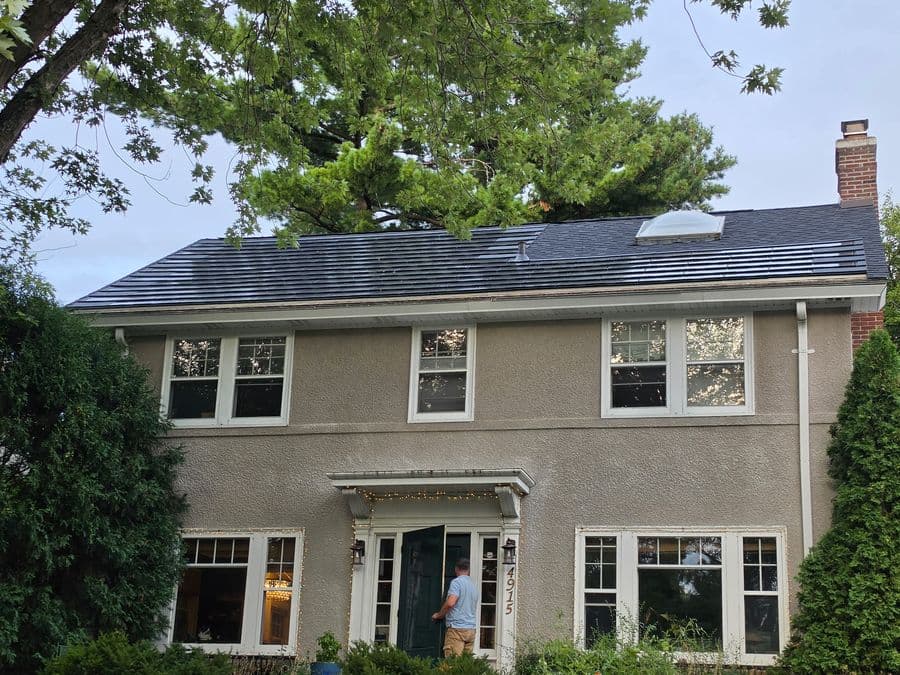
Talk to us in Minneapolis.
4928 Cedar Avenue S.
Minneapolis, MN 55417
Call 612-456-9225 or email peter@energyreleaf.com. Roofers and builders: ask about becoming a member installer.
Questions
Minnesota solar shingle questions.
Do solar panels work in Minnesota winters?
What happens to solar shingles under snow?
What happens if solar panels are damaged by hail?
What Minnesota solar incentives exist?
Do you need a licensed electrician for solar in Minnesota?
Get a free property review.
Tell us where the roof is and we'll tell you what it can do. Homes, commercial buildings, and roofers or builders who want to offer it.