
The short answer
Choose solar panels if your roof has plenty of life left, you want the lowest upfront cost, or you need the most power from a small roof.
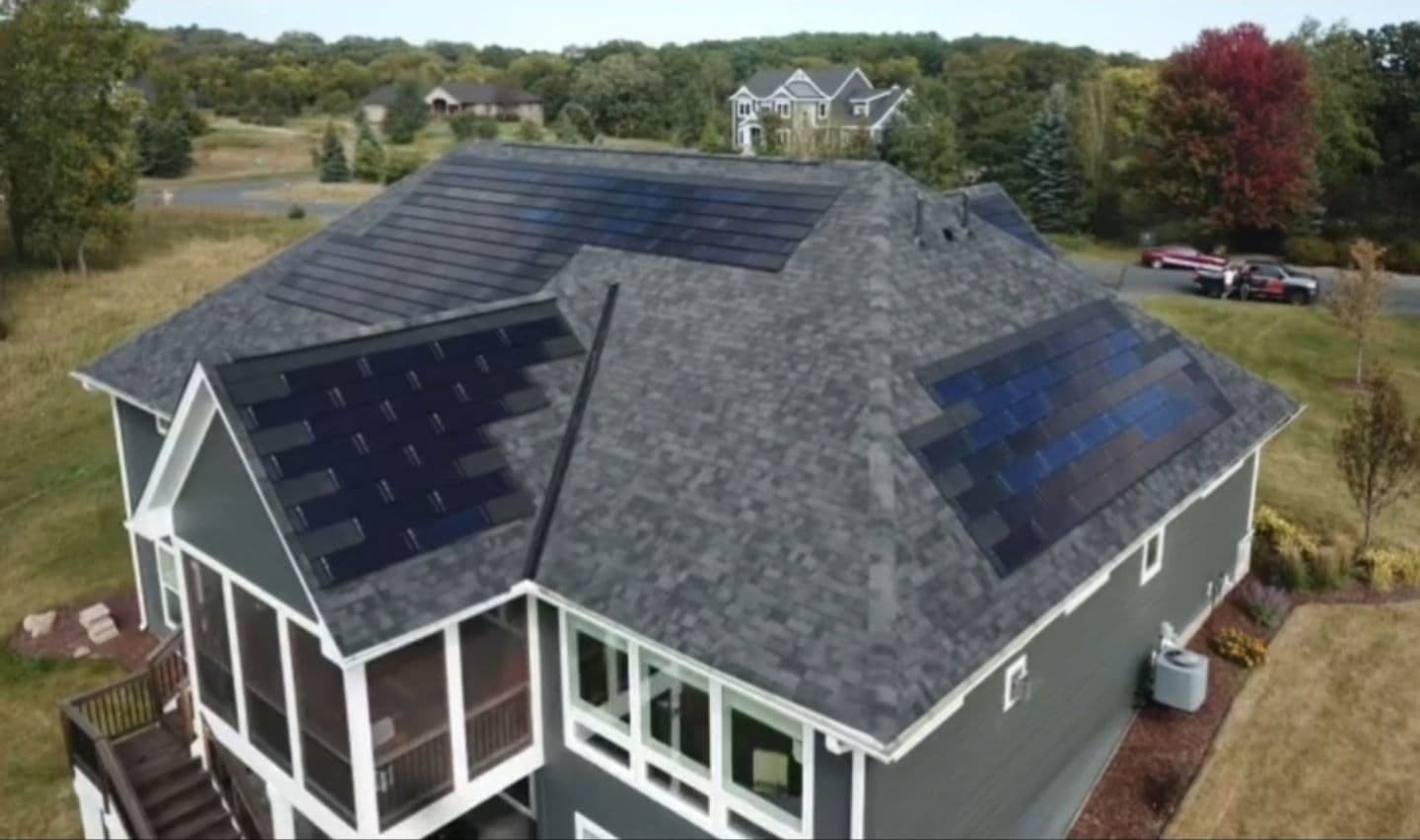
Choose solar shingles if your roof needs replacing now, you don't want racking bolted through a brand-new roof, or you want solar that looks like part of the roof.
Most of the decision comes down to one question: how many years are left on the roof you have? Panels go on top of your existing roof. Solar shingles are the roof. If the roof under a set of panels wears out before the panels do, you pay to take the array off and put it back. If you're replacing the roof anyway, that problem goes away.
Side by side
| Solar panels | Solar shingles | |
|---|---|---|
| What it is | Framed modules on metal rails, mounted above your roofing | Solar modules built into the roofing itself |
| Who installs it | Usually a solar crew, after the roof is done | A roofing crew, as part of the re-roof. A licensed electrician makes the final connection |
| Attachment | Rails bolted through the roofing into the rafters, with flashing at each mount | No racking bolted through the roof |
| Looks | Raised panels with a visible gap and frame | Flush with the roof, in courses like shingles |
| Output per square foot | Usually higher, because air under the panels keeps them cooler | Usually lower per square foot, made up with coverage |
| Upfront cost | Usually lower, if the roof doesn't need replacing | Higher than panels alone; compare it with a new roof plus panels |
| Next re-roof | Panels and racking come off, then go back on | The solar is the roof, so there's no remove-and-reinstall |
| Repairs | Swap a panel; leaks can start at roof mounts | Energy ReLeaf: swap one shingle's solar insert by removing six screws |
When solar panels are the better choice
Be honest with yourself about these, because they cover a lot of homes:
- Your roof is young. If the roof has 15 or more good years left, tearing it off to install solar shingles means paying for a roof you don't need yet. Panels go on top and start producing.
- You want the lowest upfront cost. Panel hardware is mass-produced and installers compete on it. Per watt, panels are usually the cheaper way to add solar.
- Your roof is small or shaded and you need every watt. Panels make more power per square foot, so a small sunny plane can carry more capacity with panels.
- Your roof is flat. Shingles need a pitched roof to shed water. Flat roofs are panel territory.
When solar shingles are the better choice
- The roof needs replacing now. This is the big one. You're paying for a new roof either way. A solar shingle roof puts that roofing budget to work, and the roofing crew installs the roof and the solar in one job.
- Storm damage is forcing a re-roof. After hail or wind damage, the replacement roof can be the solar system. See replacing a storm-damaged roof with solar.
- You don't want holes through a new roof. Rack mounts mean many attachment points through the roofing, each sealed with flashing. Solar shingles go down in courses like any other shingle, with no rack bolted through the roof.
- Looks matter, or the HOA cares. Solar shingles sit flush and read as part of the roof from the street.
- You plan to stay. A roof and solar system that work as one piece pay off best over the long run, and you skip the remove-and-reinstall at the next re-roof.
Cost: compare the right things
A quote for panels and a quote for a solar shingle roof aren't the same job, so don't compare them directly.
- If your roof is fine, compare panels with solar shingles plus the value of the roof you'd be tearing off early. Panels usually win.
- If your roof is due for replacement, compare a new roof plus panels with a solar shingle roof. Then add one more line to the panel side: the cost of taking the array off and putting it back the next time that roof wears out.
Incentives change often, and they depend on your address and on whether the system counts as residential or commercial. Your proposal lists the ones that apply at your address when we prepare it. We don't publish prices because every roof is different; the free property review gives you real numbers for yours.
Output and efficiency
Panels usually make more power per square foot. They sit a few inches above the roof, and that air gap keeps the cells cooler; solar cells lose output as they heat up. Solar shingles lie flush, so they run warmer.
What solar shingles do instead is cover more of the roof. Energy ReLeaf courses are offset by 50%, which lets the shingles follow hips and valleys instead of stopping at a rectangle. Each shingle is rated at 55 W (PH-055) or 60 W (PH-060), so a kilowatt of rated capacity is roughly 17 of the 60 W shingles.
Rated wattage isn't the number to decide on, though. What matters is how many kilowatt-hours your roof produces in a year, given its pitch, direction, shading and local weather. That's what the production estimate in your proposal gives you.
Weather, repairs and durability
A roof has to be a roof first. Energy ReLeaf shingles are tested to roofing standards:
- Fire: UL 790 Class A
- Wind: UL 1897, rated 110 to 200 mph depending on fastening and exposure
- Wind-driven rain: TAS 100
- Hail: glass tested with a 2-inch steel ball dropped from 51 inches
- Temperature: operates from −40 to +90 °C
Repairs are where solar shingle systems differ most from each other, so ask any installer how a single damaged piece gets replaced. With Energy ReLeaf, each shingle's solar insert comes out by removing six screws, and the roof around it stays closed. Full details are on the specifications page and the warranty and certifications page.
Installation and getting switched on
Panels are usually a two-trade job: a roofer for the roof, then a solar crew who adds racking and panels on top.
A solar shingle roof is installed by a roofing crew with standard roofing tools, as part of the roof. The touch-safe, plug-and-play connectors keep electrician labor to a minimum, always subject to local requirements, and we strongly recommend a licensed electrician on site to observe the connections and test the system. See how a roofing crew installs it.
Energy ReLeaf also builds battery storage into the roof system. By default the system doesn't feed power back to the grid, so it can be switched on right away instead of waiting on utility interconnection. If you want to export power to the grid, it can be set up that way.
How to decide
- Find out how old your roof is, and how many good years it has left.
- If it has many years left, get panel quotes. That's usually your best value.
- If it's due, or damaged, get a solar shingle roof quote and compare it with a new roof plus panels, including a future remove-and-reinstall.
- Compare yearly production estimates in kWh, not just wattage.
- Ask each installer who installs the roof and the solar, what the warranty covers and for how long, and how a single damaged piece is repaired.
Not sure where your roof falls? Our free property review looks at your roof's planes, pitch and sun exposure, and tells you whether solar shingles make sense for it.